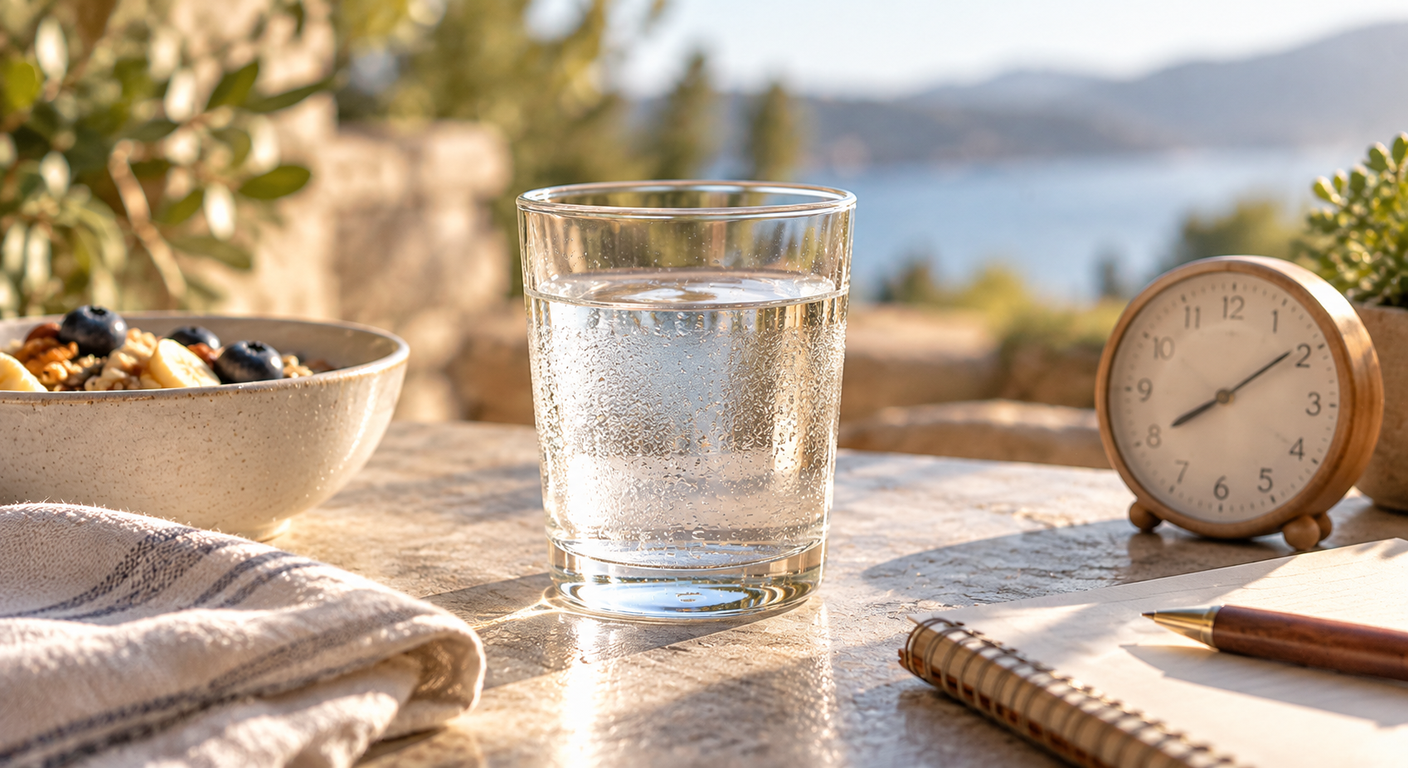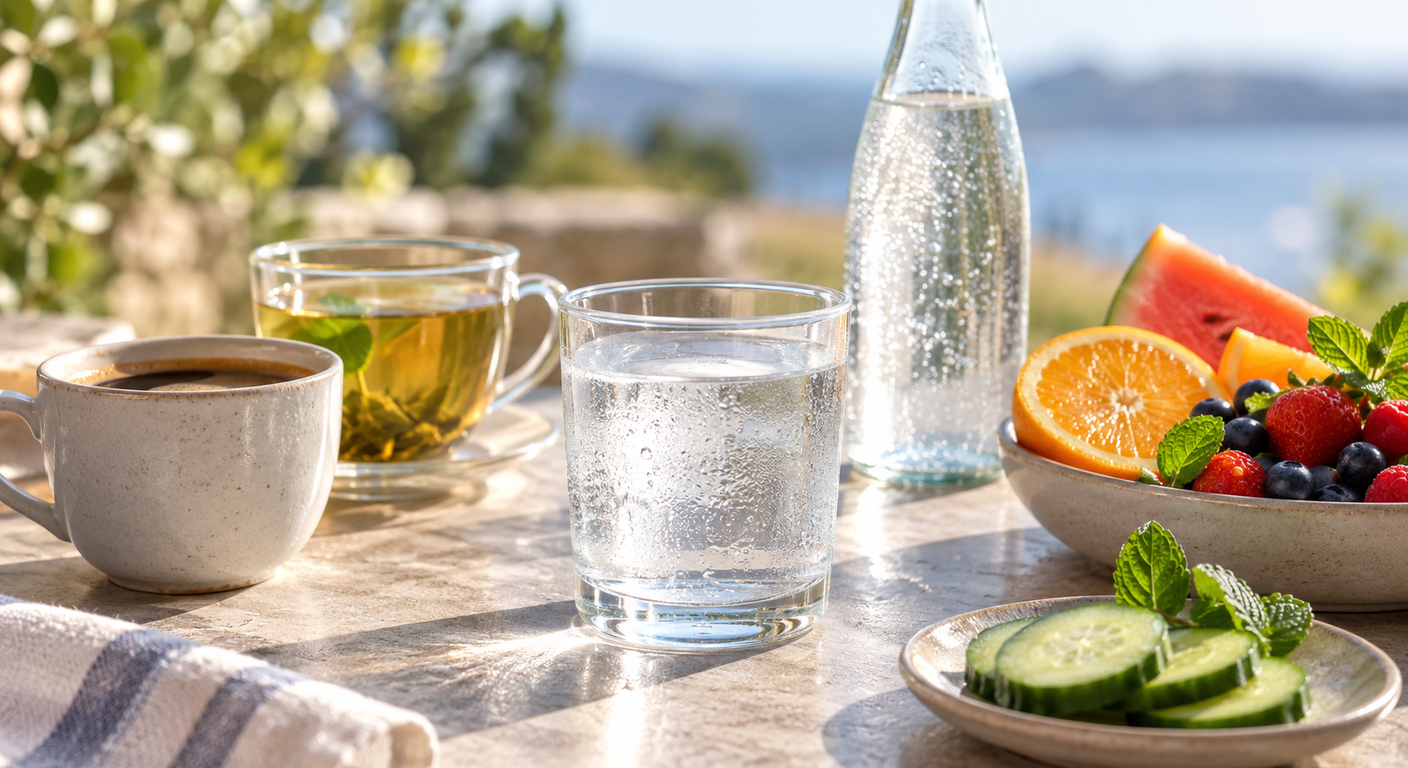
You probably do not forget that water exists. You forget it at the exact moment you are answering a message, rushing to a meeting, finishing one more task, or leaving the house.
That distinction matters because habit research points to practical tools that do not depend on remembering from scratch every time. Repeating a behaviour in a stable context can help that context become a cue for the behaviour. A review of health-habit research describes this cue-and-repetition process in the British Journal of General Practice.
For drinking water, that idea can be translated into simple choices: connect a drink with events that already happen, keep it easy to access, and use reminders as cues rather than medical instructions. Here are eight ways to build that kind of routine.
Habit 1: Stop chasing a perfect number
There is no single amount of plain water that is right for every adult on every day. Body size, diet, activity, temperature, pregnancy, breastfeeding, illness, and other factors all affect fluid needs.
This is also where popular advice becomes confusing. The European Food Safety Authority sets adequate intakes for total water of 2.0 litres per day for adult women and 2.5 litres for adult men under moderate conditions. “Total water” includes drinking water, other beverages, and moisture in food. It is not an instruction to drink that exact volume from a bottle.
The UK National Health Service offers a simpler public-health guide: aim for 6 to 8 cups or glasses of fluid a day, while recognising that some people need more. Tea, coffee, lower-fat milk, and sugar-free drinks can count too.
So choose a realistic starting target, observe how it fits your day, and adjust it when your circumstances change. A useful target should guide you, not make you feel as if you have failed at 9:07 a.m.
Habit 2: Give water a reliable cue
“I will drink more water” is a wish. “After I make my morning coffee, I will drink a glass of water” is a plan.
This kind of if-then plan is known as an implementation intention: you link an action to a specific situation. Research on habit formation suggests that repeating a simple behaviour in a consistent context can help the context become a cue for the behaviour. The useful part is not a magical number of repetitions; it is the stable connection between cue and action. A review in the British Journal of General Practice describes this cue-and-repetition approach to building health habits.
Pick two or three moments that already happen most days:
- after waking up;
- with breakfast or lunch;
- when you start work;
- after returning from the bathroom;
- before leaving home;
- when you finish a workout.
Keep the behaviour simple and clearly tied to the cue. The habit research cited here concerns repetition and automaticity; it does not prescribe a particular volume of water for each cue.
Habit 3: Keep the drink where the decision happens
A bottle hidden in a bag is storage. A glass beside your keyboard is a prompt.
Put water in the path of the behaviour you want:
- beside the coffee machine in the morning;
- on your desk before work begins;
- near the sofa before you start a film;
- by the door when you pack for a walk;
- in the same visible place in the kitchen.
This is a practical way to make the cue more visible. It is not a medical rule, and it does not guarantee that a person will drink more. If a large bottle feels cumbersome, use a smaller glass and refill it. If plain water is unappealing, chilled water, sparkling water, or water with slices of lemon, lime, cucumber, or berries are alternatives to consider. The US Centers for Disease Control and Prevention also suggests unsweetened sparkling water or fruit-infused water as alternatives to sugary drinks.
Habit 4: Make the next drink convenient, not heroic
If most of the day’s logged drinking is repeatedly left until late, the log is showing a recurring gap in the routine. An app target does not create a medical requirement to consume the remaining volume rapidly before the day ends.
Fill the bottle before you become busy. Keep a glass you like using within reach. If you move between rooms, decide where the bottle “lives” so it does not vanish into the background. When you leave home, pair taking water with something you already check:
Keys, phone, wallet, water.
Convenience also means choosing a drink size you are comfortable with. A habit plan does not require one particular serving size. The amount still needs to fit your overall hydration needs and any medical advice that applies to you.
Habit 5: Use reminders that tell you what to do
There is no evidence-based universal frequency for hydration notifications. The best available reminder research does not establish that everyone should be prompted every hour, or at any other fixed interval.
If you want to use reminders as behavioural cues, options to test include:
- scheduling reminders only during your waking hours;
- placing them around long gaps in your normal routine;
- using fewer reminders at first;
- turning off reminders during meals if you already drink then;
- changing the schedule when work, travel, or exercise changes.
A small mobile-health experiment found that reminders paired with implementation intentions improved daily health-goal success, although the study involved 64 adults and several behaviours, not hydration alone. It is useful evidence for reminders as cues, not proof that one notification schedule works for everyone. You can read the study in the Journal of Medical Internet Research.
Treat a reminder as a cue, not a medical command. If you have just had a drink or the timing is not useful, the schedule can be adjusted. The small study above supports reminders as one behavioural tool, but it does not establish a particular hydration schedule.
Put the reminder into practice: Octi Flow on the App Store lets you choose a reminder window and track drinks without turning the routine into a rigid schedule.
Habit 6: Record the drink while it is still in your hand
Logging a drink when it happens is one practical way to rely less on reconstructing the whole day from memory later. The result is still a self-recorded activity log, not a clinical measurement of hydration.
Log a drink immediately, or connect logging to a physical action: put the glass down, then tap once. Keep the number of common drink sizes small so that recording does not become a form to complete.
A household glass is not a clinical hydration measurement. A personal log can still show what you recorded, including long gaps and times when drinking tends to happen. It cannot measure sweat losses, blood concentration, kidney function, or hydration status directly.
Habit 7: Let colour and thirst provide context
For most healthy adults, thirst is useful information. Urine colour can offer another rough check: the NHS advises aiming for clear, pale-yellow urine. Darker urine and urinating less than usual can be signs of dehydration, but colour is not a diagnosis. Foods, supplements, and medicines can also change it.
Other possible signs of dehydration include thirst, a dry mouth, tiredness, and dizziness. Severe symptoms such as confusion, fainting, very little or no urination, rapid breathing, or a rapid heartbeat need prompt medical attention. The US National Library of Medicine provides a fuller overview through MedlinePlus.
Do not use an app target to override what your body or clinician is telling you. The point of tracking is to add context, not to replace medical judgement.
Habit 8: Change the plan when the day changes
Your usual routine is only a baseline. Hot weather, prolonged physical activity, fever, vomiting, diarrhoea, pregnancy, and breastfeeding can increase fluid needs. The NHS explicitly notes that people may need more in hot environments, during long periods of activity, and while ill or recovering.
During hot weather, WHO/Europe recommends drinking water regularly and reducing strenuous activity during the hottest part of the day. During exercise, fluid needs vary with intensity, duration, conditions, and individual sweat loss, so a general daily app target should not be treated as a sports-hydration formula. WHO/Europe
More is not always safer. Drinking excessive amounts of water can disturb the body’s fluid and electrolyte balance. People with kidney, heart, or liver conditions, or anyone who has been told to limit fluids, should follow individual medical advice rather than a generic hydration target. MedlinePlus lists both inadequate intake and drinking too much water among causes of fluid and electrolyte imbalance.
When reminders stop working
If reminders are being dismissed repeatedly, one practical option is to simplify the schedule and test it again:
- Reduce the number of reminders you are testing.
- Move them to moments when you can realistically act.
- Pair each reminder with the same clearly defined behaviour.
- Keep the drink accessible at that time.
- Review whether the behaviour is actually being repeated after several days.
If a behaviour begins to occur reliably without the notification, you can test whether the reminder is still useful. Habit research measures repeated behaviour and automaticity; it does not require a notification to remain permanently.
A simple routine to try tomorrow
Do not install eight new rules at once. Try this:
- Put a glass or bottle where you will see it in the morning.
- Pair one reliable event, such as breakfast, with the decision to have a drink.
- Add one reminder in the longest gap of your day.
- Record drinks when they happen, not at night.
- Adjust the plan for heat, exercise, illness, and medical advice.
That is enough to begin. The evidence on habit formation supports repeated action in a stable context, but it does not guarantee that one cue or reminder pattern will work for everyone. Keep the parts that fit your routine and change the parts that do not.