“Drink more water” is technically correct advice for a hot day. It just isn’t very useful.
More than what? How often? Does everyone need electrolytes? And how do you know when you have had enough?
The honest answer is that temperature alone cannot give you a personal water target. A quiet afternoon indoors is very different from walking through a city in direct sun, working outside or exercising in high humidity.
Your fluid needs depend on what your body is actually losing.
There is no universal summer number
The European Food Safety Authority sets adequate total water intakes of 2.0 litres per day for adult women and 2.5 litres for adult men under moderate environmental temperature and moderate physical activity. EFSA
But those numbers are often misunderstood.
They refer to total water, including drinking water, other beverages and moisture from food. They also apply to moderate temperatures and moderate physical activity. EFSA describes them as population reference values, not precise prescriptions for every individual.
Hot weather and physical activity can increase fluid losses, while illness, pregnancy, breastfeeding and some medical circumstances can also change fluid needs. NHS
So the usual daily number can be a starting point, but it is not a fixed summer limit or a target you should force yourself to hit exactly.
Why heat changes your water needs
Sweating is one of the main ways your body releases heat. As sweat evaporates from your skin, it helps cool you down.
At the same time, you lose water and electrolytes, particularly sodium.
How quickly that happens depends on more than the temperature shown in a weather app. Humidity, wind, direct sunlight, clothing, physical activity and how accustomed you are to the heat all affect your body’s ability to cool itself.
High humidity is especially uncomfortable because sweat evaporates less efficiently. You may continue sweating without getting the same cooling effect.
This is why two people can spend an hour outside in the same temperature and lose very different amounts of fluid. It is also why a universal formula based only on air temperature would be misleading.
A practical guide for different kinds of hot days
You do not need to calculate every drop of sweat. It is more useful to match your drinking pattern to what you are doing.
Mostly indoors, with little physical activity
Keep water available and drink regularly throughout the day. There is usually no reason to force several extra litres simply because it is hot outside, especially when you are spending most of the day in a cooled indoor space.
Pay attention to thirst, urine colour and how often you urinate.
Walking, commuting or spending short periods outside
Carry water when access may be limited. WHO/Europe advises drinking water regularly during hot weather and reducing strenuous activity during the hottest part of the day. WHO/Europe
There is no single evidence-based volume or interval for every short walk or commute. Conditions, activity and individual losses matter.
Exercising or doing physical work in the heat
For moderate work in moderately hot conditions, the US National Institute for Occupational Safety and Health advises workers to drink about one cup of water every 15 to 20 minutes. Its heat-stress recommendations also use water for moderate activity lasting less than two hours and advise that workers generally should not drink more than six cups per hour. NIOSH
These are occupational heat-stress recommendations for workers, not a universal drinking schedule for everyone outdoors. Exercise intensity, heat exposure, acclimatisation and individual sweat losses still matter. Excessive fluid intake can also be unsafe.
Sweating for several hours
When heavy sweating continues for several hours, NIOSH recommends drinks containing balanced electrolytes.
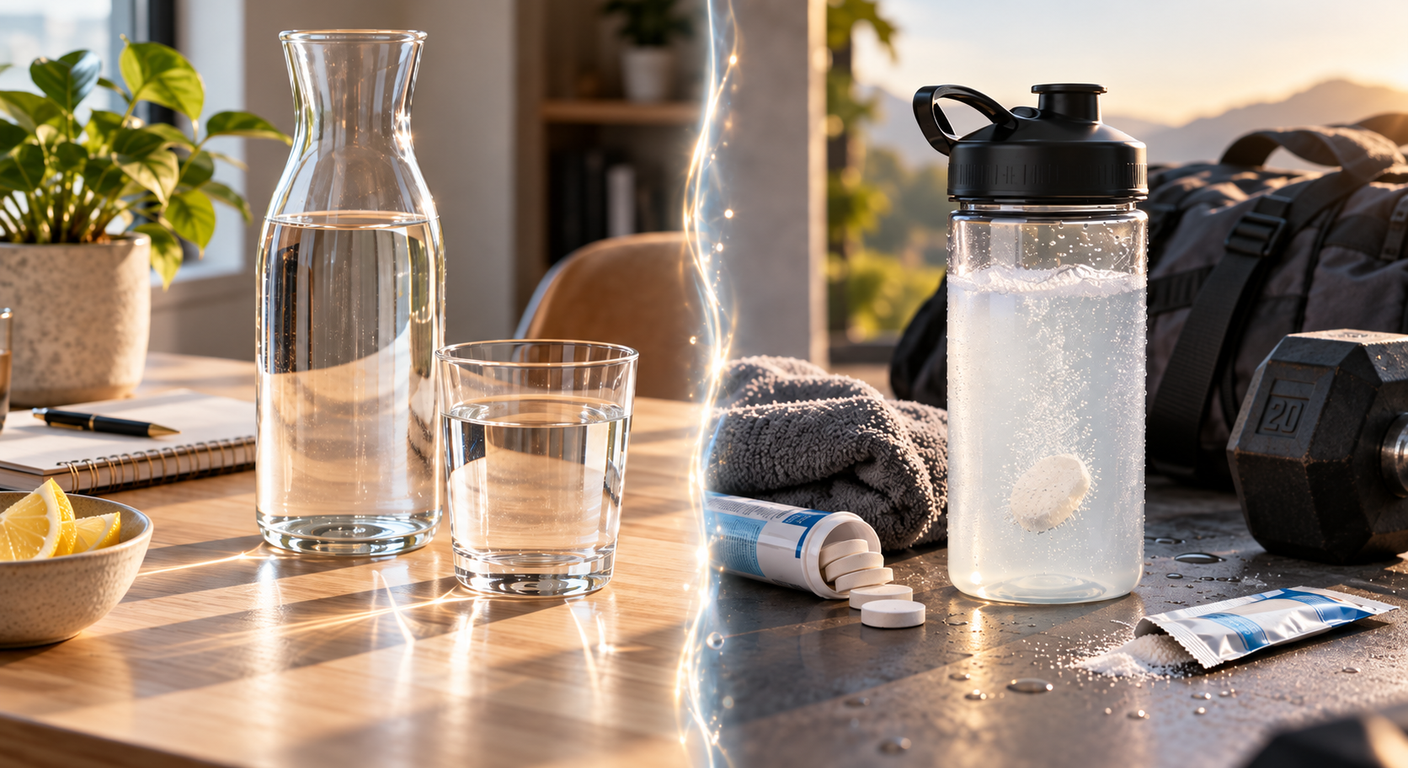
That does not mean everyone needs a sports drink during summer. For an ordinary day without prolonged heavy sweating, official guidance still centres on water. Electrolyte drinks become more relevant during extended physical work, endurance exercise or other situations involving sustained sweat loss.
Do you need electrolytes?
Usually, not just because the weather is hot.
Electrolytes are minerals with an electric charge, including sodium and potassium. They help regulate fluid balance and support nerve and muscle function.
You lose some electrolytes through sweat, but the amount varies widely. A person taking a short walk does not have the same replacement needs as someone working outdoors for several hours.
Sports drinks can be useful when sweating is prolonged, but they may also contain substantial amounts of sugar and sodium. They should not automatically replace water throughout the day.
A simple rule is:
- Normal daily activity: water is usually the main drink you need.
- Several hours of sweating: a balanced electrolyte drink may be useful.
- A medical condition affecting fluid or electrolytes: follow advice from a healthcare professional rather than a general hydration rule.
WHO/Europe recommends drinking water regularly during hot weather while avoiding sugary, alcoholic or caffeinated drinks as part of its heat-safety guidance. WHO/Europe
How to tell whether you are drinking enough
No home check can measure hydration perfectly, but a few signs are genuinely useful.
Look at your urine
The NHS advises most people to drink enough during the day for urine to be a clear, pale yellow colour. It also lists dark yellow urine and urinating less often than usual among common signs of dehydration. NHS hydration guidance NHS dehydration guidance
Urine colour is a practical clue, not a standalone diagnosis. Medicines, foods and health conditions can also change urine colour.
Notice other symptoms
Common signs of dehydration in adults include:
- thirst
- dry mouth
- dark-coloured urine
- urinating less than usual
- tiredness
- dizziness
Heat illness can also involve symptoms such as headache, nausea, dizziness, weakness, heavy sweating or muscle cramps, depending on the condition. CDC
Use thirst, but understand its limits
For most healthy adults in ordinary conditions, thirst is a useful guide. The National Academies notes that normal drinking behaviour and thirst are generally enough to maintain hydration for the average person.
However, thirst may be less reliable in older adults, and it may not be enough on its own during prolonged exercise, illness or sustained heat exposure. Regular access to water is especially important in those situations.
Water cannot make unsafe heat exposure safe
Hydration matters, but it is only one part of heat safety.
Drinking enough water does not cancel out hours in direct sun, intense exercise at the hottest time of day or a room that is dangerously hot.
WHO/Europe recommends avoiding strenuous activity during the hottest part of the day, staying in the shade and, when possible, spending time in a cool place. WHO/Europe
Know the difference between dehydration and heat illness
Heat exhaustion and heat stroke need more than another glass of water.
Possible heat exhaustion
Warning signs can include:
- heavy sweating
- weakness or unusual tiredness
- dizziness or fainting
- nausea or vomiting
- muscle cramps
- cool, pale or clammy skin
Move to a cool place, loosen unnecessary clothing, cool the skin with wet cloths or a cool bath and sip water.
Move the person out of the heat and begin cooling. Seek medical care when symptoms are severe, worsening, persistent, or when the person cannot safely rehydrate. Heat-related symptoms should not be managed by fluid alone if the person is becoming more unwell.
Possible heat stroke
Confusion, loss of consciousness, seizures and very high body temperature can indicate heat stroke.
Heat stroke is a medical emergency. Call emergency services immediately and begin cooling the person. Do not try to make an unconscious or confused person drink.
Who needs to be especially careful?
Anyone can become ill in hot weather, but the risk is higher for:
- older adults
- infants and young children
- pregnant people
- people working or exercising outdoors
- people with heart, kidney, respiratory or other chronic conditions
- people taking medicines that affect sweating, urination, blood pressure or temperature regulation
Some older adults experience a reduced sense of thirst. Certain medications can also increase dehydration risk or make it harder for the body to cool itself.
Do not stop or change medication because of hot weather without speaking to a doctor or pharmacist.
People with heart or kidney conditions, or anyone with a prescribed fluid restriction, should not override individual medical instructions because of a general hot-weather article. WHO/Europe specifically advises people with chronic conditions or medications that may be affected by heat to seek appropriate health advice. WHO/Europe
A simple hot-weather hydration plan
You do not need a complicated formula.
- Keep water within reach.
- Drink water regularly during hot weather, as WHO/Europe advises.
- Expect fluid needs to rise when sweating or physical activity increases losses.
- Consider electrolytes when sweating continues for several hours.
- Use urine colour, thirst and other symptoms as practical feedback.
- Take cooling breaks and reduce activity when the heat becomes difficult.
- Treat confusion, fainting or loss of consciousness as an emergency.
The right amount is not the largest amount you can drink. It is enough to replace your losses without forcing excessive fluid in a short period.
Octi Flow can be used to log drinks and set reminders when a hot day changes your normal routine. A hydration tracker cannot measure sweat loss, diagnose dehydration or replace medical advice.
Sources and further reading
-
European Food Safety Authority: Scientific Opinion on Dietary Reference Values for Water
-
Centers for Disease Control and Prevention: About Heat and Your Health
-
CDC: Heat-Related Illnesses, What to Look For and What to Do
This article provides general information and is not a substitute for individual medical advice. Speak with a healthcare professional if you have a medical condition, take medication that affects fluid balance or have been advised to limit fluids.